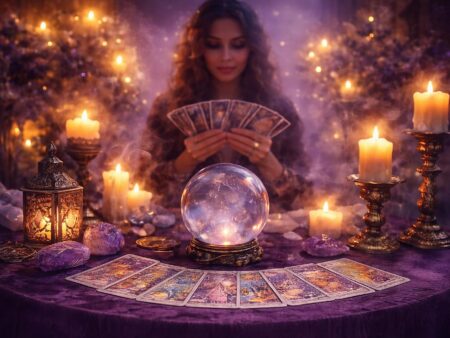
The question “are tarot cards evil” has been debated for decades. Some people associate tarot cards with superstition, occult practices, or negative spiritual influence. Others view tarot as a symbolic tool for self-reflection and personal insight. Because tarot has been portrayed in many different ways throughout history and popular culture, it is easy to misunderstand what tarot cards actually represent.
In reality, tarot cards themselves are neutral objects. They are pieces of illustrated paper that carry symbolic meanings. The interpretation of tarot cards depends on the context of tarot reading, the experience of the tarot reader, and the intentions of the person seeking guidance.
This article explores the origins of tarot cards, why some people believe tarot is dangerous, and how tarot reading and tarot online services are actually used today. By understanding the history and symbolism of tarot, it becomes easier to separate myth from reality.
Tarot Reading: What It Really Means
Before answering whether tarot cards are evil, it is important to understand what tarot reading actually is.
Tarot reading is a practice that uses a deck of tarot cards to explore questions, emotions, and life situations. During a tarot reading, a tarot reader draws cards from the deck and interprets their symbolic meanings based on the question asked.
The process is not about predicting a fixed future. Instead, tarot reading helps people reflect on possibilities, patterns, and choices.
Key Elements of Tarot Reading
| Element | Explanation |
|---|---|
| Tarot deck | A set of 78 symbolic cards |
| Tarot reader | A person who interprets the cards |
| Spread | The layout used to place cards |
| Interpretation | Meaning derived from symbolism |
Tarot reading often focuses on topics such as relationships, career decisions, emotional challenges, and personal growth.
Tarot Reader: The Role of the Tarot Reader
A tarot reader plays a central role in tarot reading. While tarot cards provide symbolic imagery, it is the tarot reader who interprets the meaning of the cards within a specific context.
Professional tarot readers usually develop their skills through years of practice, studying symbolism, psychology, and intuitive interpretation.
Responsibilities of a Tarot Reader
- Interpreting tarot cards accurately
- Asking clarifying questions
- Creating a comfortable environment for discussion
- Maintaining ethical boundaries
- Avoiding fear-based predictions
A tarot reader does not control a person’s future. Instead, they provide insight that allows clients to think about their situations from a different perspective.
Are Tarot Cards Evil?
The idea that tarot cards are evil often comes from cultural or religious interpretations rather than the history of tarot itself.
In some belief systems, practices involving divination are discouraged. As a result, tarot cards have sometimes been labeled as dangerous or immoral. However, tarot cards themselves are simply symbolic tools.
Common Beliefs About Tarot
| Belief | Reality |
|---|---|
| Tarot cards summon spirits | Tarot cards are symbolic images |
| Tarot reading predicts fate | Tarot explores possibilities |
| Tarot readers control destiny | People maintain free will |
| Tarot is inherently evil | Tarot is neutral |
The perception of tarot as something dark or dangerous is largely influenced by movies, myths, and misunderstanding.
Why People Believe Tarot Cards Are Evil
The idea that tarot cards are evil often comes from three main sources: religion, misunderstanding, and media influence.
Reasons Behind the Fear of Tarot
| Reason | Explanation |
|---|---|
| Religious teachings | Some traditions discourage divination |
| Cultural myths | Stories exaggerate tarot’s influence |
| Horror films | Movies portray tarot as supernatural |
| Lack of knowledge | Misunderstanding tarot symbolism |
In reality, tarot cards were originally created as playing cards in Europe during the 15th century.
The History of Tarot Cards
Tarot cards first appeared in Italy in the 1400s. At that time, they were used for a card game called Tarocchi.
Only centuries later did tarot become associated with mysticism and symbolic interpretation.
Timeline of Tarot Development
| Period | Use of Tarot |
|---|---|
| 15th century | Playing cards for games |
| 18th century | Symbolic interpretation begins |
| 19th century | Occult traditions study tarot |
| Modern era | Tarot reading and tarot online services |
Understanding the historical context helps explain why tarot cards are not inherently evil.
Symbolism in Tarot Cards
Tarot cards use symbolic imagery to represent life experiences.
For example:
- The Fool represents new beginnings
- The Tower represents sudden change
- The Star symbolizes hope
- The Devil represents attachment or temptation
These symbols are not literal representations of supernatural forces. They are metaphors used to reflect human emotions and situations.
Tarot Reading and Personal Reflection
Many people use tarot reading as a tool for self-reflection. Instead of asking “What will happen?” they ask questions like:
- What should I focus on right now?
- What challenges might I face?
- What opportunities exist in this situation?
Tarot reading encourages introspection and thoughtful decision-making.
Psychological Perspective on Tarot
Psychologists often explain tarot reading through the concept of symbolic interpretation.
Humans naturally respond to stories, images, and archetypes. Tarot cards provide a structured way to explore these ideas.
Psychological Benefits of Tarot Reading
| Benefit | Explanation |
|---|---|
| Self-awareness | Understanding emotions |
| Perspective | Seeing situations differently |
| Reflection | Encouraging thoughtful decisions |
| Creativity | Stimulating imagination |
From this perspective, tarot reading works similarly to journaling or storytelling.
Differences Between Tarot and Fortune-Telling
People often confuse tarot reading with fortune-telling. While the two practices are sometimes related, they are not identical.
Tarot vs Fortune-Telling
| Tarot Reading | Fortune-Telling |
|---|---|
| Focuses on guidance | Focuses on predictions |
| Encourages reflection | Claims to predict events |
| Uses symbolism | Uses various methods |
Professional tarot readers usually emphasize guidance rather than absolute predictions.
How to Approach Tarot Safely
If someone is interested in tarot reading or tarot online services, there are simple ways to ensure a positive experience.
Tips for Responsible Tarot Use
- Choose experienced tarot readers
- Avoid fear-based services
- Treat tarot as guidance, not certainty
- Maintain personal responsibility for decisions
Responsible use of tarot keeps the practice constructive and balanced.
The Role of Intuition in Tarot Reading
Intuition plays an important role in tarot reading. While tarot cards have traditional meanings, tarot readers often interpret them based on context and insight.
Experienced tarot readers combine knowledge, intuition, and communication to create meaningful interpretations.
Are Tarot Cards Dangerous?
The simple answer to the question “are tarot cards evil” is no. Tarot cards themselves are neutral objects.
Like books, art, or language, tarot cards can be interpreted in many ways. The impact depends on how they are used and understood.
When approached responsibly, tarot reading can be a tool for reflection and discussion rather than something harmful.
Conclusion
The belief that tarot cards are evil is largely based on misunderstanding. Tarot cards have a long cultural history and were originally created as playing cards.
Today, tarot reading is used by many people as a way to explore ideas, emotions, and personal decisions. With the growth of tarot online services and access to the best tarot readers, the practice has become more accessible than ever.
Tarot reading should not be viewed as something that controls destiny. Instead, it is a symbolic system that encourages awareness, reflection, and thoughtful decision-making.