Learn Tarot
How to Keep a Tarot Journal
A tarot journal is the fastest way to improve your readings — and to see patterns in your own life.
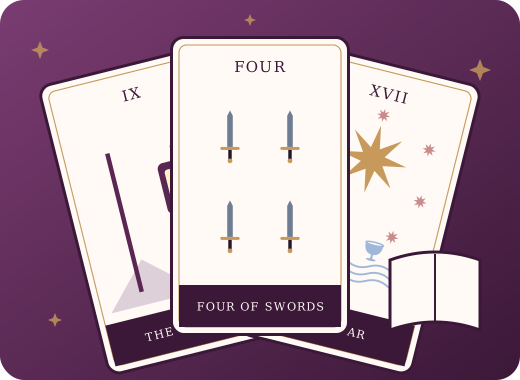
What to Record
- Date and question
- Spread used and the cards drawn (upright or reversed)
- Your first impression of each card
- Your overall interpretation
- What actually happened — added later
Daily Card Template
| Field | Example |
|---|---|
| Date | Oct 3 |
| Card | Four of Swords |
| First impression | Rest — I'm tired |
| Message | Slow down before the deadline |
| Evening reflection | Took a break; work went better |
Journaling Prompts
- What emotion does this card bring up?
- Where is this card's energy showing up in my life?
- What would the figure on this card tell me?
- How does this card answer my question?
Review Monthly
Look back at the month's cards. Repeated cards and suits often reveal a theme — a powerful insight you'd miss without notes.
Spread Reading Template
| Field | What to write |
|---|---|
| Question | Exactly as you asked it |
| Spread | e.g. three-card past/present/future |
| Cards | Name + upright/reversed per position |
| Patterns | Dominant suit, numbers, Majors |
| Interpretation | Your story of the reading |
| Follow-up (1 month) | What actually happened |
Paper or Digital?
Paper journals help you slow down and sketch spreads; digital notes are searchable, so you can find every time a card appeared. Many readers keep a small notebook for daily pulls and a digital log for full readings.
Frequently Asked Questions
What should I write in a tarot journal?
The date, question, cards, your first impressions, your interpretation and — later — what actually happened.
Want a personal tarot reading?
Start with PsychicBook: 50% off + 10 free minutes for new customers.